Augustus: On Power, Stewardship, and the Duty of the Mature Man
Every era faces a moment when the noise of cultural fracturing threatens to drown out the foundations of civic order. In contemporary culture, where hyper-individualism, perpetual agitation, and the worship of unrefined, youthful ambition dominate the social landscape. The distant past offers an unexpected mirror.
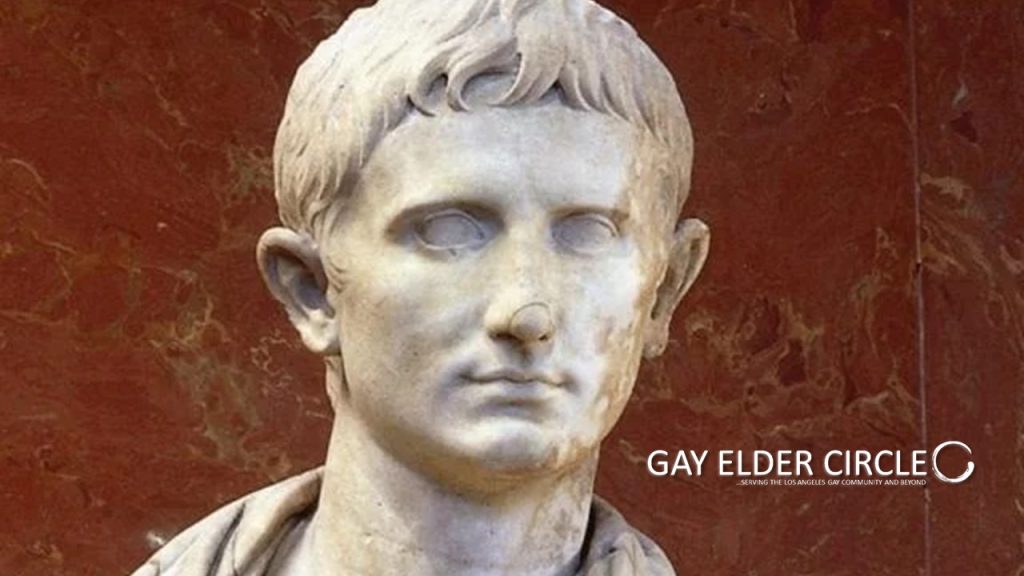
Two millennia ago, Rome stood at a similar precipice. A century of brutal civil wars had shattered the Republic, leaving a traumatized society adrift in political cynicism and moral exhaustion. Out of that collapse emerged the reign of Augustus Caesar, a historical transition that remains one of the most compelling studies in how raw power can evolve into generative stewardship.
Examining this ancient transition offers critical insights into how the archetypal journey from youth to elderhood can speak directly to the dilemmas facing men in modern society
Modern discussions of political and social life often treat ancient empires purely as mechanisms of conquest and subjugation. Yet, the Augustan settlement endured not merely through military force, but through a calculated commitment to structural social goodness.
Having witnessed the devastation caused by rival warlords, Augustus recognized that no society can achieve lasting peace if its population lives in state-instigated precarity. His regime instituted structural reforms that served as early precursors to the modern social contract:
- Institutionalized Relief (Cura Annonae): Rather than treating the nourishment of the public as casual, political charity, the state established a permanent, managed supply of grain. By guaranteeing free or subsidized bread to hundreds of thousands of urban citizens, public policy removed basic human survival from the whims of market speculators.
- Civic Protection and Sanitation: The creation of Rome’s first professional fire brigade (vigiles) and standing urban police force replaced private street gangs with public safety, extending basic security to working-class neighborhoods.
- Demilitarization and Veteran Care: Recognizing that destitute former soldiers were a primary engine of civil instability, the state established a permanent military treasury funded by imperial revenue. Veterans completed their service not as desperate men forced into lawlessness, but as landed citizens with guaranteed pensions.
- Public Infrastructure over Private Luxury: Massive public works—aqueducts, public baths, flood defenses, and restored temples—were constructed to ensure that civic wealth served collective life, providing every citizen with access to beauty, cleanliness, and order.
These policies were not born of sentimental idealism, but of a profound, pragmatic realization: true stability is impossible without public welfare.
Beyond its historical impact, the trajectory of Augustus’s life illustrates a psychological shift that directly addresses the contemporary “elder drought”, the deficit of mature, grounded leadership in modern male culture.
The psychological journey of mature masculinity requires an internal transition from the Warrior (defined by competition, acquisition, and conquest) to the King or Wise Elder (defined by containment, order, and stewardship).
In his youth, Augustus wielded absolute power with ruthless efficiency. Yet, his greatest mature achievement was knowing what power to refuse. By declining the titles of monarch or dictator and operating under the modest designation of Princeps (“First Citizen”), he demonstrated that true authority in mature years stems not from overt displays of force, but from visible self-restraint and fidelity to shared institutions.
For modern men living in a culture that frequently equates strength with dominance, this historical precedent offers a vital lesson: restraint is often the highest expression of power.
Young ambition seeks infinite expansion more territory, higher status, greater output. But a family, an organization, or a society cannot survive perpetual expansion. In his final years, Augustus offered a famous directive to his successors: keep the Empire within its natural borders.
The mature elder understands that wisdom lies in defining healthy boundaries, protecting the perimeter, and cultivating the interior life of the community rather than relentlessly pursuing the next conquest.
One of the central crises in contemporary culture is the presence of older men who remain locked in competitive Warrior modes, viewing younger generations as threats to their relevance.
The healthy elder archetype operates in reverse. The elder recognizes that his primary task is no longer to occupy the center of the stage, but to create a stable container where younger men can step into their own agency, fail safely, and receive validation.
The ancient world was under no illusions about the tragic nature of human history. Monuments eventually crumble, laws are rewritten, and empires rise and fall.
Yet, the quiet lesson buried in the Augustan transition remains striking for contemporary culture: the true measure of a man’s maturity lies not in what he conquers for himself, but in what he stewards for those who follow. When the desire for personal dominance yields to the responsibility of elderhood, chaos gives way to a peace that can shelter generations.