The Soil Remembers What the Storm Forgets
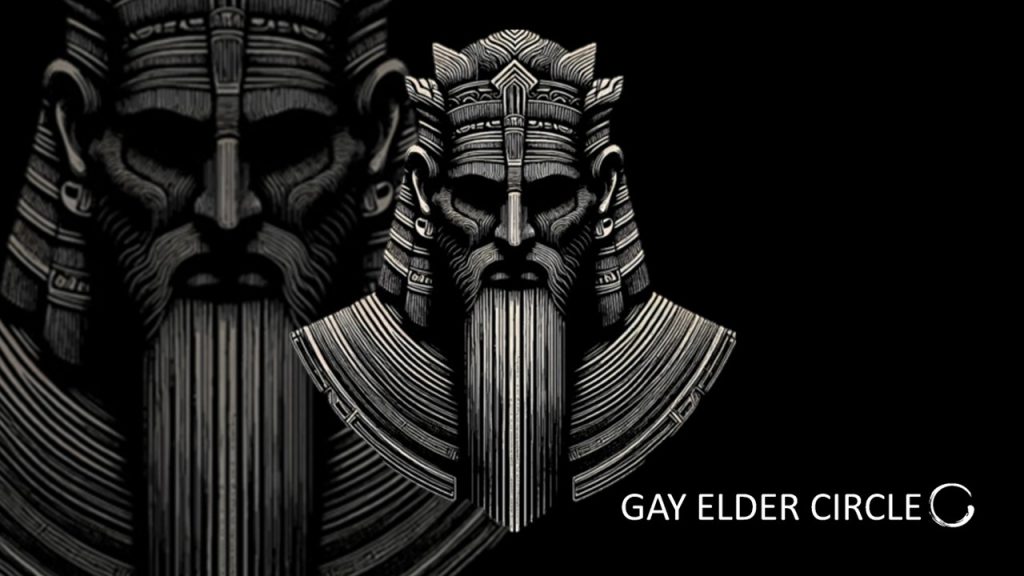
To examine governance, authority, and the weight of years in a world consumed by rapid digital noise is to return to the foundational mountain, the ancient E-kur at Nippur. Across millennia, modern memory has often rendered historical authority as merely the storm: sudden, unyielding, and absolute. Yet the storm is but a passing breath. True sovereignty, whether in ancient Mesopotamia or in contemporary civic life, is never found in the thunderhead, but in the slow, deliberate work of ordering chaos so that community life may take root, flourish, and endure.
When the ancient world was young and unformed, human existence stood amidst wild, untamed currents. In the Sumerian theological imagination, the authority of Enlil, the Ellilūtu, or supreme stewardship, was defined not by tyranny, but by a singular commitment: serving as the structural pillar holding up the heavens so that the earth below might remain safe.
Consider the pickaxe, the Sumerian al-ĝar. Myth tells us that rather than hoarding divine technology, Enlil fashioned the tool and placed it directly into the hands of humanity. This ancient act speaks directly to modern leadership: true humanitarian governance does not consist of keeping a community dependent upon central authority. It consists of conferring agency, providing the foundational infrastructure, the symbolic canals, embankments, and boundary stones of justice, so that families and neighborhoods can cultivate their own prosperity. The shepherd’s true duty has always been to construct the fold, secure the perimeter, and ensure the conditions where life can thrive.
In today’s contemporary landscape, where volume is frequently mistaken for strength and frantic action for purpose, this ancient archetype offers a vital mirror for mature men. Contemporary culture often encourages men to cling to the fever of the youth-warrior, measuring self-worth by conquest, status, and raw economic output long past the season when those fires ought to have settled into steady embers.
The ancient world’s view of Enlil suggests a far more profound model for mature male elderhood today:
In an age of relentless cultural fragmentation, the highest act of social goodness an elder can offer is emotional and civic stability. The E-kur was revered in antiquity not simply because it dominated the skyline, but because it was fixed. Modern elders are called to provide that same grounded center of gravity, an enduring, unshakeable presence where younger generations feel secure enough to build, experiment, and grow.
The authority of age is not meant to be hoarded; it is meant to be bestowed. Just as ancient divine decrees conferred responsibility onto new civic leaders, a wise elder in contemporary society uses his accumulated social capital, experience, and standing to clear pathways for those who follow. His legacy is measured not by how long he occupies the center of the stage, but by how effectively he equips and elevates the next generation to lead.
Even ancient myth recognized that power unchecked by reflection inevitably brings its own deluge. When heavy-handedness overreaches, the true mark of an elder, then as now, is not the stubborn defense of a past error, but the capacity for solemn self-correction: honoring human resilience, extending blessing, and converting past missteps into protective wisdom for the future.
Ancient history does not merely live in dusty texts; it acts as a quiet counselor. Governance, both personal and civic, is ultimately the patient, daily maintenance of order, equity, and peace. To embody the elder today is to carry the unyielding strength of the earth beneath one’s feet, while holding a steady, nurturing desire to see the modern world yield its best fruit.